


Every couple juggling demanding jobs and raising children knows how quickly daily routines can overshadow meaningful connection. Building a supportive environment is not just a luxury, but a necessity for relationship growth. Research shows that open communication and emotional support create the foundation for long-term satisfaction in partnerships. This article unveils practical, gamified strategies to help busy couples enhance emotional bonds and share responsibilities with confidence.
Table of Contents
- Step 1: Prepare Your Relationship Growth Environment
- Step 2: Identify and Prioritize Shared Relationship Goals
- Step 3: Set Actionable and Measurable Milestones Together
- Step 4: Track Progress With Gamified Rewards and Feedback
- Step 5: Review Accomplishments and Adjust Goals Collaboratively
Quick Summary
| Key Insight | Explanation |
|---|---|
| 1. Create a Supportive Environment | Design a relationship environment that fosters emotional safety, open communication, and personal growth for both partners. |
| 2. Define Shared Goals Together | Collaboratively identify and prioritize relationship goals that align individual aspirations with your partnership’s vision. |
| 3. Set Measurable Milestones | Break down larger goals into actionable, specific milestones that can be tracked and celebrated for motivation. |
| 4. Use Gamified Tracking | Implement a fun, point-based system to monitor relationship progress and celebrate achievements to enhance engagement. |
| 5. Regularly Review and Adjust Goals | Schedule consistent check-ins to reflect on accomplishments, address challenges, and adapt goals collaboratively. |
Step 1: Prepare your relationship growth environment
Creating a purposeful relationship environment requires intentional design and mutual commitment. Just like athletes prepare their training spaces, couples need to establish a supportive ecosystem that nurtures emotional connection and personal development.
Successful relationships thrive when partners create an intentional framework that supports growth. Understanding relationship development dynamics reveals that environments facilitating open communication and emotional support are crucial. Consider these key strategies:
- Define shared relationship goals
- Create dedicated communication time
- Establish mutual respect boundaries
- Design collaborative problem-solving approaches
- Build accountability mechanisms
Your relationship growth environment should balance individual autonomy with collective progress. Think of it like co-designing a personal development laboratory where both partners can experiment, learn, and evolve together. Emotional safety becomes the foundational infrastructure supporting your shared journey.
A relationship growth environment transforms daily interactions into opportunities for connection and mutual understanding.
Practical implementation means creating physical and emotional spaces that encourage vulnerability, active listening, and constructive feedback. This might involve dedicating specific times for check-ins, creating shared digital spaces for goal tracking, or establishing ritual practices that reinforce your connection.
Pro tip: Schedule a quarterly relationship design workshop where you collaboratively review, adjust, and reimagine your shared growth strategy.
Step 2: Identify and prioritize shared relationship goals
Successfully mapping out your relationship’s future requires a strategic approach to goal setting that combines individual aspirations with collective dreams. Understanding how to collaboratively establish meaningful objectives will transform your partnership into a powerful team focused on mutual growth.
Goal coordination strategies demonstrate that couples who intentionally align their objectives experience enhanced life satisfaction and individual progress. To effectively identify and prioritize shared relationship goals, consider this comprehensive framework:
- Conduct individual reflection sessions
- Schedule dedicated goal-mapping conversations
- Create categories for goal exploration
- Assess compatibility and potential conflicts
- Develop measurable and realistic milestones
Begin by separately listing personal goals across key life domains like career, health, family, finances, and personal development. Transparent communication becomes the cornerstone of this process, allowing both partners to understand each other’s underlying motivations and long-term visions.
Shared goals are not about sacrificing individual dreams but creating a synergistic path forward together.
Next, compare your individual lists and identify areas of natural alignment and potential collaboration. Look for goals that complement each other or create opportunities for mutual support. Some goals might require compromise, while others can be pursued independently with emotional encouragement from your partner.
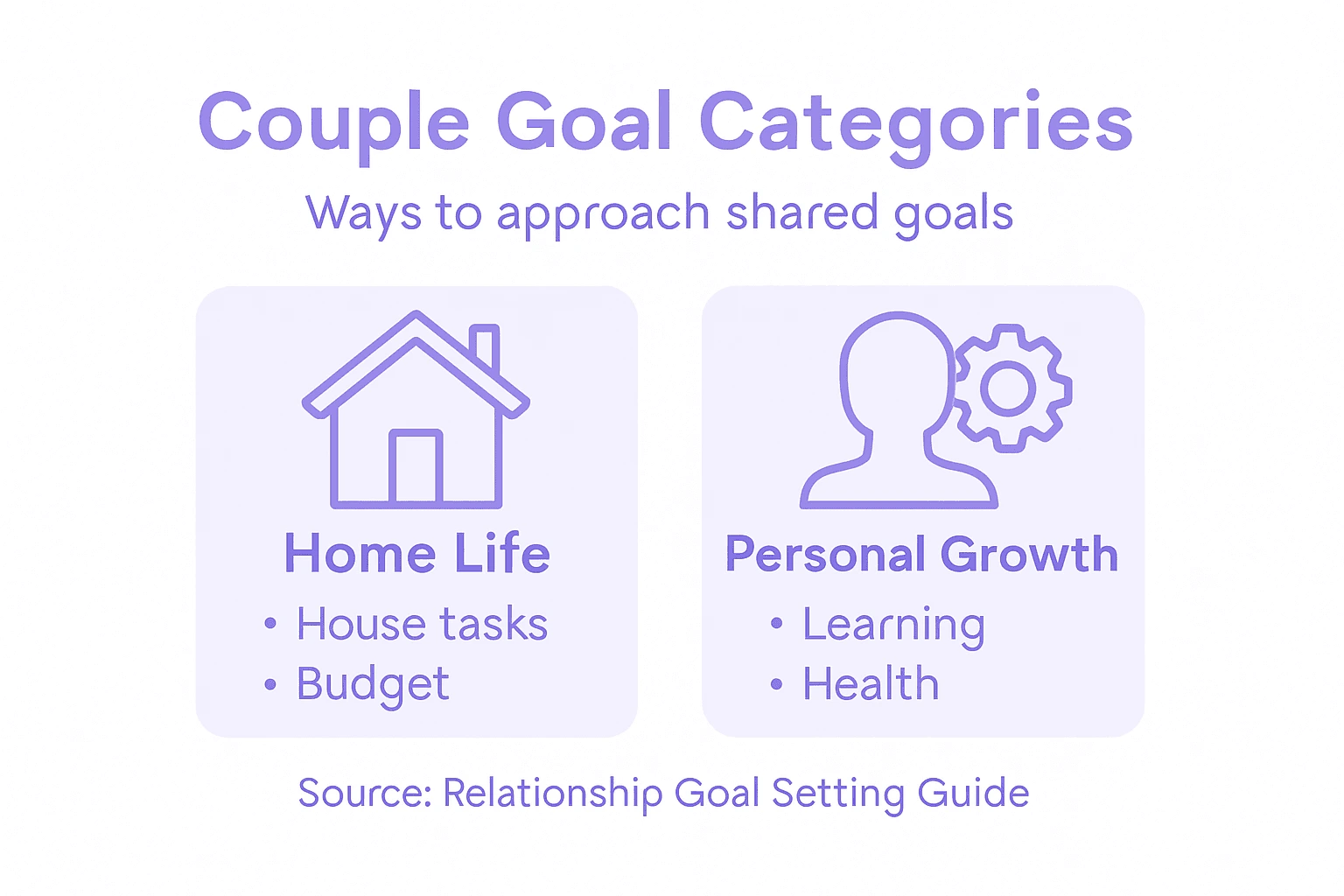
Here’s a reference guide to relationship goal categories and collaboration methods:
| Goal Category | Collaboration Method | Sample Approach |
|---|---|---|
| Career | Joint career planning | Discuss future ambitions |
| Health | Shared fitness routines | Schedule workouts together |
| Family | Coordinated parenting | Plan family activities |
| Finances | Budgeting together | Set savings goals annually |
| Personal Growth | Encouragement and support | Share self-development plans |
This table helps partners quickly see how each life domain can be collaboratively approached.
Pro tip: Use a digital shared document or relationship goal-tracking app to collaboratively document, review, and adjust your goals quarterly.
Step 3: Set actionable and measurable milestones together
Transforming broad relationship goals into concrete, achievable milestones requires strategic planning and collaborative commitment. This process turns abstract aspirations into tangible checkpoints that keep both partners motivated and aligned.
Milestone planning strategies demonstrate the critical importance of creating structured, time-bound targets that facilitate progress tracking. Effective milestone setting involves several key components:
- Break larger goals into smaller, manageable steps
- Establish clear and specific achievement criteria
- Define realistic timeframes for each milestone
- Create accountability mechanisms
- Design flexible review and adjustment processes
Begin by identifying specific measurable outcomes for each shared goal. These milestones should be concrete enough to track progress but flexible enough to accommodate unexpected life changes. Collaborative evaluation becomes crucial in maintaining momentum and mutual understanding.
Meaningful milestones transform relationship goals from wishful thinking into strategic action plans.
Consider creating a shared tracking system that allows both partners to visualize progress and celebrate incremental achievements. This might involve digital spreadsheets, dedicated apps, or quarterly review meetings where you assess progress, recalibrate expectations, and acknowledge each other’s efforts.

Pro tip: Implement a reward system that recognizes milestone achievements to maintain motivation and reinforce collaborative goal-setting.
Step 4: Track progress with gamified rewards and feedback
Transforming relationship goal tracking into an engaging, motivational experience requires creativity and a playful approach to personal growth. Gamification turns milestone achievements into exciting opportunities for connection and mutual celebration.
Relationship progress tracking can become a dynamic, interactive process that keeps both partners invested and enthusiastic about their shared journey. Design your tracking system around these key principles:
- Create point-based achievement systems
- Establish meaningful reward structures
- Design visual progress indicators
- Implement mutual recognition mechanisms
- Build in celebration moments
Start by developing a collaborative tracking framework that feels more like a fun game than a chore. This might involve creating experience points (XP) for completing relationship milestones, designing level-up ceremonies, or establishing a shared achievement dashboard that visualizes your collective progress.
Gamified tracking transforms mundane progress monitoring into an exciting shared adventure.
The most effective tracking systems balance accountability with genuine appreciation. Consider creating reward tiers that unlock special experiences, like date nights, personal treats, or meaningful shared activities. These rewards should feel personalized and reflect each partner’s unique love language and preferences.
Pro tip: Rotate responsibility for designing monthly tracking challenges to keep the system fresh and maintain mutual engagement.
Step 5: Review accomplishments and adjust goals collaboratively
Successful relationships thrive on continuous reflection and adaptive goal-setting. The journey of partnership isn’t about achieving perfect progress, but maintaining a dynamic, responsive approach to shared growth and individual aspirations.
Collaborative goal review strategies demonstrate the critical importance of transparent communication and willingness to modify objectives. Effective review sessions should incorporate these essential elements:
- Schedule regular review intervals
- Create a judgment-free discussion environment
- Celebrate individual and collective achievements
- Identify potential obstacles and challenges
- Develop flexible adjustment mechanisms
Begin by establishing a consistent review rhythm that feels natural and supportive. This might involve quarterly meetings, digital check-ins, or structured conversations that allow both partners to openly share their experiences, challenges, and evolving perspectives.
Relationship growth is an ongoing conversation, not a fixed destination.
During review sessions, focus on honest and compassionate communication. Approach the discussion as teammates working together, not as opponents competing against each other. Recognize that goals can shift as personal circumstances, career trajectories, and life stages change.
Pro tip: Use a shared digital document to track progress, ensuring both partners have real-time visibility into accomplishments and emerging goals.
Here’s a summary comparing the five steps to effective relationship growth:
| Step | Focus Area | Key Benefit | Example Practice |
|---|---|---|---|
| 1 | Environment Design | Builds emotional safety | Quarterly workshop |
| 2 | Shared Goals | Enhances alignment | Digital goal tracker |
| 3 | Milestone Setting | Maintains motivation | Reward system for achievements |
| 4 | Progress Tracking | Increases engagement | Gamified dashboard |
| 5 | Collaborative Review | Strengthens adaptability | Regular reflection meetings |
This comparison highlights how each step uniquely contributes to relationship development.
Transform Your Relationship Goals into Lasting Growth
The “Relationship Goal Setting Guide for Couples Success” highlights the challenge many couples face: turning shared goals and emotional connection into practical, measurable progress. If you find it difficult to design a nurturing relationship environment or set actionable milestones together, you are not alone. The key is creating a balanced system that encourages transparency, emotional safety, and ongoing motivation without pressure or conflict.
Cutest Couple is built precisely to address these challenges. Our gamified relationship growth app helps couples like you design your unique growth environment, prioritize shared goals with clear milestones, and track progress through playful rewards tied to your love languages. With features like experience points, love-language–based recognition, and the Intimacy Wish Shop, Cutest Couple turns your daily efforts into meaningful connection and sustained partnership success.
Take control of your relationship growth today with a solution designed to spark appreciation and support rather than assignment stress. Experience how Cutest Couple’s gamified system brings your shared aspirations alive. Join a growing community of couples transforming everyday moments into measurable growth.
Ready to build the relationship you both envision with a structured yet fun approach? Visit Cutest Couple to start your journey. Explore how our app complements the relationship goal setting guide and keeps you connected, motivated, and growing together.
Frequently Asked Questions
How can we start setting relationship goals together?
To start setting relationship goals, schedule a dedicated conversation where both partners can share their individual aspirations. Begin by listing personal goals across key life areas, then explore how these goals align to identify shared objectives.
What are some effective strategies for tracking our relationship goals?
Effective strategies for tracking relationship goals include using a shared document or app that allows both partners to monitor their progress together. Establish clear, measurable milestones and review them regularly to stay motivated and engaged.
How often should we review our relationship goals?
You should review your relationship goals regularly, ideally every three months. Establish a rhythm, such as quarterly meetings, to reflect on achievements, discuss challenges, and adjust your goals as needed.
What should we include in our relationship growth environment?
Your relationship growth environment should include elements that promote open communication and emotional safety, such as defined boundaries and dedicated time for discussions. Create a physical and emotional space that encourages vulnerability and support.
How can we ensure our relationship goals remain aligned?
To ensure your relationship goals remain aligned, conduct regular check-ins where both partners openly share updates on their personal aspirations. Use these discussions to identify any shifts in priorities and adapt goals collaboratively as needed.
What are some reward ideas for achieving relationship milestones?
You can create a reward system that includes personalized treats or experiences, such as a special date night or a fun outing, whenever a milestone is achieved. Tailor rewards to each partner’s preferences to keep motivation high.
No responses yet