


Building meaningful routines and keeping your relationship strong can feel challenging when everyday life gets busy. Finding activities that spark joy and foster deeper connection often slips through the cracks. The right approach can transform ordinary habits and teamwork into powerful experiences that make your partnership more resilient.
This list offers creative, research-backed games and activities that turn habit-building, shared goals, appreciation, and emotional growth into fun, actionable practices for couples. You’ll discover tools grounded in behavioral psychology, proven teamwork methods, and love language frameworks that make it easier to connect and grow. Get ready to unlock smarter ways to strengthen trust, celebrate progress, and enjoy your journey together.
Table of Contents
- 1. Habit Tracking Games To Build Positive Routines
- 2. Shared Goal Challenges For Teamwork And Trust
- 3. Love Language Reward Systems For Appreciation
- 4. Contribution-Based Progress Games For Fairness
- 5. Intimacy Wish Shops To Spark Emotional Connection
- 6. Milestone Achievement Games For Long-Term Growth
- 7. Wisdom Card Collections To Reflect And Learn Together
Quick Summary
| Takeaway | Explanation |
|---|---|
| 1. Habit tracking enhances accountability | Using habit tracking games fosters shared responsibility and mutual support in relationships, leading to collective growth. |
| 2. Shared goals strengthen trust | Engaging in shared goal challenges helps partners align their strengths and deepen their communication, enhancing their bond. |
| 3. Personalized appreciation is crucial | Implementing love language reward systems allows couples to express affection in ways that resonate with each partner, increasing emotional connection. |
| 4. Fairness improves relationship satisfaction | Contribution-based progress games emphasize equitable recognition, so both partners feel valued for their unique contributions. |
| 5. Reflection fosters emotional intelligence | Wisdom card collections create opportunities for meaningful dialogue, helping couples navigate their relationship with greater understanding and empathy. |
1. Habit Tracking Games to Build Positive Routines
Couples who play together stay together. Habit tracking games are powerful tools that transform mundane daily responsibilities into exciting shared challenges. By gamifying routine tasks and personal growth, these interactive systems help partners build stronger connections and develop consistent positive behaviors.
The science behind habit tracking is fascinating. Behavioral psychology principles reveal that intelligent tracking tools can dramatically improve long-term habit formation by providing personalized motivation and immediate feedback. Instead of feeling pressured, couples experience habit development as a collaborative and enjoyable journey.
Here are some key benefits of habit tracking games:
- Creates shared accountability without blame
- Transforms routine tasks into fun challenges
- Provides visual progress tracking
- Builds mutual understanding of each other’s efforts
- Reinforces positive relationship dynamics
Tracking habits together isn’t about perfection. It’s about progress and supporting each other’s growth.
Successful habit tracking involves choosing meaningful micro-habits that are easy to implement. The Tiny Habits method suggests anchoring new behaviors to existing routines and celebrating small wins. For instance, couples might create a game around morning routines where each partner earns points for preparing breakfast, making the bed, or sending an encouraging text.
Pro tip: Start with just 2-3 shared habits and gradually expand your tracking game as you build momentum and comfort with the system.
2. Shared Goal Challenges for Teamwork and Trust
Partners who challenge themselves together grow stronger together. Shared goal challenges are strategic relationship-building experiences that transform individual efforts into powerful collaborative achievements. These intentional exercises help couples develop deeper trust and communication skills while pursuing meaningful objectives.
Research on teamwork dynamics reveals that structured challenges significantly enhance relationship cooperation by engaging both individual and collective motivation. By aligning personal strengths toward common goals, couples create a more resilient partnership.
Effective shared goal challenges typically involve:
- Complementary skill utilization
- Balanced contribution expectations
- Clear progress tracking
- Mutual accountability
- Celebration of joint achievements
Trust isn’t built through grand gestures but through consistent, intentional collaboration.
Some practical examples of shared goal challenges include financial savings missions, fitness challenges, learning a new language together, or completing a home improvement project. The key is choosing objectives that leverage each partner’s unique abilities while creating opportunities for mutual support and growth.
Successful couples recognize that effective teamwork requires more than just working side by side. It demands open communication, active listening, and a genuine commitment to each other’s success.
Pro tip: Select challenges that genuinely excite both partners and create a flexible reward system that celebrates effort and progress, not just final outcomes.
3. Love Language Reward Systems for Appreciation
What if showing love could feel like playing an exciting game? Love language reward systems transform emotional appreciation into an engaging interactive experience that helps couples connect more deeply and intentionally.
Brain research on romantic love reveals that specific gestures of appreciation activate powerful emotional reward circuits. By understanding how each partner experiences love uniquely, couples can create personalized systems of recognition that feel meaningful and authentic.
The five primary love language categories include:
- Words of Affirmation
- Quality Time
- Acts of Service
- Physical Touch
- Receiving Gifts
Appreciation is not one-size-fits-all. It’s about understanding your partner’s unique emotional language.
Successful love language reward systems work by creating targeted emotional experiences that make each partner feel genuinely seen and valued. For instance, someone whose primary love language is acts of service might feel most appreciated when their partner completes a challenging household task unexpectedly.
Couples can design their reward system by first identifying each other’s primary love languages through open conversation and intentional observation. This approach transforms appreciation from a random occurrence into a strategic relationship-building practice.
Pro tip: Create a personalized “love points” tracking system that allows partners to earn and exchange meaningful rewards specific to their individual love languages.
4. Contribution-Based Progress Games for Fairness
Fairness isn’t about keeping score. It’s about creating a relationship where both partners feel genuinely valued and heard. Contribution-based progress games transform traditional relationship dynamics by celebrating each partner’s unique investments.
Collaborative gaming research demonstrates that equitable participation systems dramatically improve relationship engagement and satisfaction. These innovative approaches ensure that neither partner feels overlooked or underappreciated.
Key principles of contribution-based progress games include:
- Transparent tracking of individual efforts
- Balanced recognition across different types of contributions
- Flexible point systems that value diverse skills
- Mutual celebration of collective achievements
- Elimination of competitive dynamics
True partnership isn’t about equal tasks but about equitable appreciation.
Successful contribution tracking goes beyond simple chore division. Meaningful recognition means understanding that contributions can be emotional, practical, creative, or supportive. For instance, managing family communications might be equally valuable to handling financial planning.
Couples can design their system by first mapping out the various ways each partner contributes to their shared life. This might include emotional support, household management, financial planning, career development, or personal growth initiatives.
Pro tip: Create a flexible point system that allows partners to define and celebrate contributions beyond traditional measurable tasks, emphasizing personal growth and mutual support.
5. Intimacy Wish Shops to Spark Emotional Connection
Imagine a magical marketplace where emotional needs become tangible experiences. Intimacy wish shops transform abstract relationship desires into concrete opportunities for deeper connection and understanding.
Research on emotional intimacy highlights the critical role of responsive communication in strengthening couple bonds. These interactive platforms allow partners to explore and fulfill each other’s unspoken emotional needs.
Key components of an effective intimacy wish shop include:
- Confidential emotional expression
- Structured wish submission process
- Reciprocal understanding mechanisms
- Creative fulfillment strategies
- Ongoing emotional investment tracking
Intimacy isn’t about perfection. It’s about vulnerability and genuine curiosity about your partner’s inner world.
Emotional currency in these systems goes beyond traditional transactional approaches. Partners can request meaningful experiences like deep conversations, surprise gestures, or specific forms of support that resonate with their individual emotional languages.
Successful couples treat their intimacy wish shop as a collaborative design space. They create a safe environment where vulnerability is celebrated and emotional needs are acknowledged without judgment.
Pro tip: Design your intimacy wish shop with a spirit of playfulness and curiosity, focusing on creating experiences that make your partner feel genuinely seen and appreciated.
6. Milestone Achievement Games for Long-Term Growth
Relationships are epic journeys with countless opportunities for adventure and personal transformation. Milestone achievement games transform relationship development into an exciting expedition of shared growth and intentional progress.
Couples enrichment research demonstrates that structured milestone tracking significantly enhances relationship satisfaction and personal development. These strategic games help partners navigate their shared journey with purpose and excitement.
Key elements of effective milestone achievement games include:
- Transparent goal visualization
- Periodic reflection sessions
- Collaborative progress tracking
- Celebration of individual and collective achievements
- Adaptive goal-setting mechanisms
Growth isn’t about reaching perfection. It’s about enjoying the journey and supporting each other along the way.
Relationship wisdom cards can serve as powerful tools in these milestone games. They might include prompts for deep conversations, challenges that encourage personal development, or reflective questions that help partners understand each other’s evolving dreams and aspirations.
Successful couples approach milestone tracking as a collaborative design process. They create flexible frameworks that honor individual growth while reinforcing their collective vision.
Pro tip: Design your milestone achievement game with built-in flexibility, allowing space for unexpected personal transformations and celebrating the unique path of your relationship.
7. Wisdom Card Collections to Reflect and Learn Together
What if you could turn life’s most profound lessons into a playful, shared adventure? Wisdom card collections transform deep reflection into an engaging, collaborative experience that helps couples grow together.
Contemplative research reveals that structured reflective activities dramatically enhance couples’ emotional intelligence and mutual understanding. These wisdom card systems create intentional spaces for meaningful dialogue and personal growth.
Key characteristics of effective wisdom card collections include:
- Thought-provoking discussion prompts
- Diverse emotional exploration topics
- Non-judgmental reflection frameworks
- Opportunities for vulnerability
- Structured yet flexible learning experiences
Wisdom isn’t about having all the answers. It’s about asking better questions together.
Successful wisdom card practices involve creating a safe, curious environment where both partners can share openly. Emotional exploration techniques might include drawing cards that prompt conversations about past experiences, future dreams, personal challenges, or shared values.
Couples can design their wisdom card sessions as weekly rituals, creating dedicated time for deep connection and mutual learning. The goal is not to solve problems but to understand each other more profoundly.
Pro tip: Approach wisdom card collections with genuine curiosity and a commitment to listening without judgment, allowing each card to be a gateway to deeper mutual understanding.
Below is a concise table summarizing the key strategies and insights from the article “Habit Tracking Games to Build Positive Routines,” offering a clear overview of its main ideas and implementations.
| Strategy | Description | Implementation Tips |
|---|---|---|
| Habit Tracking Games | Turn daily habits into rewarding challenges shared between partners to promote growth and connection. | Start with a few habits, anchor them to existing routines, and celebrate small wins. |
| Shared Goal Challenges | Collaborate on meaningful goals to enhance trust and teamwork. | Choose objectives leveraging each partner’s strengths and create a flexible reward system. |
| Love Language Reward Systems | Customize expressions of appreciation based on individual love languages. | Design a reward system incorporating gestures resonant with each partner’s primary love language. |
| Contribution-Based Progress Games | Equitably recognize partners’ contributions through transparent tracking. | Map out contribution types and create a point system valuing diverse efforts. |
| Intimacy Wish Shops | Develop a playful system to explore and fulfill each other’s emotional needs. | Implement structured wish submissions and creative ways to fulfill them collaboratively. |
| Milestone Achievement Games | Work towards shared developmental objectives supported by structured tracking. | Celebrate progress regularly and adapt goals to evolving needs. |
| Wisdom Card Collections | Use structured prompts as tools for shared reflection and growth. | Dedicate regular periods for open dialogue facilitated by thought-provoking cards. |
Transform Your Relationship Growth with Gamified Connection
The article highlights common relationship challenges such as sustaining positive habits, balancing shared responsibilities, and deepening emotional connection through innovative growth games. Key goals include building trust, fostering appreciation through love languages, and creating fairness without pressure. If you find yourself wanting a structured yet playful way to implement habit tracking, shared goal challenges, and personalized love language rewards in your relationship, you are not alone.
Cutest Couple offers a solution perfectly aligned with these needs. Our app turns your real-life efforts into measurable progress by combining habit tracking games, love language reward systems, and contribution-based progress models that encourage growth without competition. With features like the Intimacy Wish Shop and milestone achievement tracking, you can deepen trust, spark appreciation, and support each other’s personal development.
Experience a gamified relationship system that balances teamwork, emotional fairness, and long-term growth. Discover how to make daily relationship work feel rewarding and joyful at Cutest Couple.
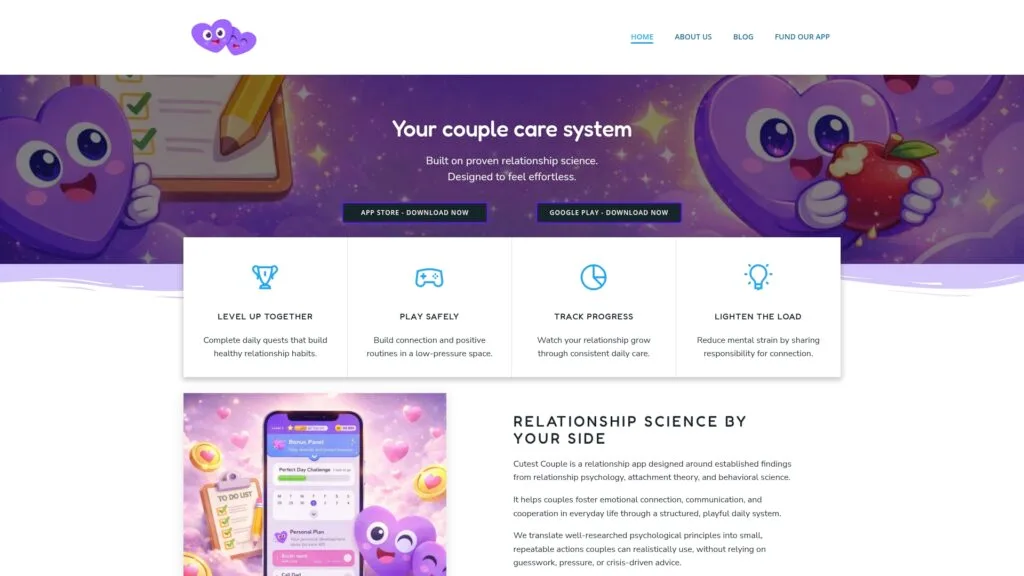
Ready to turn your relationship growth into an enjoyable journey? Visit Cutest Couple’s homepage and start strengthening your connection through proven gamification techniques from habit tracking to shared milestones. Don’t wait to build the partnership you both deserve.
Frequently Asked Questions
What are relationship growth games for couples?
Relationship growth games are interactive activities designed to strengthen connections and improve communication between partners. To start, choose one of the types mentioned in the article, such as habit tracking games or milestone achievement games, and commit to practicing them together regularly.
How can I implement habit tracking games in my relationship?
To implement habit tracking games, identify 2-3 micro-habits you both want to work on together. For instance, earn points for simple tasks like preparing meals or sharing compliments, and track your progress weekly to foster accountability and celebrate small wins.
What are some examples of shared goal challenges for couples?
Some examples of shared goal challenges include saving money for a vacation, completing a fitness journey together, or tackling a home improvement project. Set clear goals and timelines, and regularly check in on each other’s progress to maintain motivation and deepen teamwork.
How do I create a love language reward system?
To create a love language reward system, start by discussing each other’s primary love languages. Then, design a tracking system where both partners can earn and exchange rewards based on acts of appreciation that are meaningful to each partner, like quality time or acts of service.
What makes contribution-based progress games effective for couples?
Contribution-based progress games are effective because they emphasize recognizing and valuing each partner’s unique contributions, whether emotional or practical. Begin by mapping out how each of you contributes to the relationship and assign points for these contributions to celebrate collective achievements.
How can we use wisdom card collections to enhance our relationship?
Use wisdom card collections by creating or obtaining cards with thought-provoking prompts about your shared experiences and values. Set aside time weekly to draw cards and discuss the questions together, fostering deeper understanding and emotional growth in your relationship.
No responses yet