


Balancing work deadlines, laundry piles, and bedtime stories can leave even the most organized couples feeling stretched too thin. In the rush of daily life, fostering a sense of stability and warmth can seem elusive. Research shows that couple routines provide emotional safety and structure that keep families connected through stressful periods. This guide offers practical approaches for busy parents to build meaningful routines, supporting both their partnership and family well-being.
Table of Contents
- Defining Couple Routines And Their Value
- Types Of Routines In Modern Relationships
- How Shared Habits Shape Emotional Bonding
- Gamification And Love Languages In Couple Dynamics
- Common Pitfalls And How To Overcome Them
Key Takeaways
| Point | Details |
|---|---|
| Value of Couple Routines | Intentional, structured couple routines enhance emotional safety and connection between partners. |
| Types of Routines | Categorizing routines into daily connections, responsibilities, intimacy, and recreation supports diverse relationship needs. |
| Emotional Bonding Mechanisms | Shared habits create deep emotional connections through synchronization and mutual understanding. |
| Overcoming Relationship Pitfalls | Proactive communication and flexibility in routines help navigate common challenges and foster relationship growth. |
Defining Couple Routines and Their Value
In the complex landscape of modern relationships, couple routines represent far more than mundane repetitive tasks. They are intentional, structured interactions that create predictability and emotional safety between partners. Family ritual patterns reveal that these shared behaviors transcend simple task completion, communicating deeper messages of commitment and connection.
Couple routines can be categorized into several fundamental types:
- Daily Connection Rituals: Short, meaningful interactions like morning coffee together or evening check-ins
- Shared Responsibility Routines: Collaborative tasks such as meal planning, household chores, or financial management
- Emotional Intimacy Practices: Scheduled time for deep conversations, mutual goal setting, or relationship maintenance activities
- Recreational Routines: Regular date nights, weekend activities, or shared hobbies
These routines serve critical relationship functions beyond surface-level task management. Empirical research on family functioning demonstrates that consistent shared behaviors contribute significantly to marital satisfaction, providing stability during life’s transitions and challenges.
Here’s a summary comparing the main categories of couple routines and their unique relationship benefits:
| Routine Type | Core Purpose | Emotional Benefit | Practical Outcome |
|---|---|---|---|
| Daily Connection | Foster regular closeness | Increases emotional safety | Builds predictability |
| Shared Responsibility | Promote teamwork | Enhances trust and support | Improves household efficiency |
| Emotional Intimacy | Deepen understanding | Strengthens connection | Facilitates mutual goal setting |
| Recreational | Create shared enjoyment | Boosts relationship satisfaction | Sustains excitement and novelty |
The strategic implementation of couple routines transforms relationship dynamics from passive coexistence to active partnership. By establishing predictable patterns of interaction, partners create a relational operating system that supports mutual growth, reduces conflict, and deepens emotional understanding.
Pro tip: Start by selecting one small, manageable routine you can consistently practice together, focusing on quality of connection rather than perfect execution.
Types of Routines in Modern Relationships
Modern relationships require nuanced, intentional approaches to building connection. Family routine research reveals that structured interactions are critical for maintaining emotional intimacy and relationship stability. Understanding the diverse spectrum of couple routines helps partners design meaningful, sustainable connection strategies.
Couples can cultivate connection through multiple routine categories:
- Communication Routines
- Daily check-in conversations
- Weekly relationship strategy meetings
- Monthly deeper emotional reviews
- Practical Partnership Routines
- Shared financial planning sessions
- Collaborative household management
- Joint decision-making processes
- Intimacy and Affection Routines
- Regular physical touch and non-sexual connection
- Scheduled date nights
- Surprise gesture exchanges
- Personal Growth Synchronization
- Mutual goal-setting sessions
- Supporting individual and shared aspirations
- Celebrating each other’s achievements
These routine frameworks transform relationship dynamics from passive coexistence to active, intentional partnership. By establishing predictable interaction patterns, couples create a relationship ecosystem that nurtures mutual understanding, reduces potential conflicts, and generates continuous emotional investment.
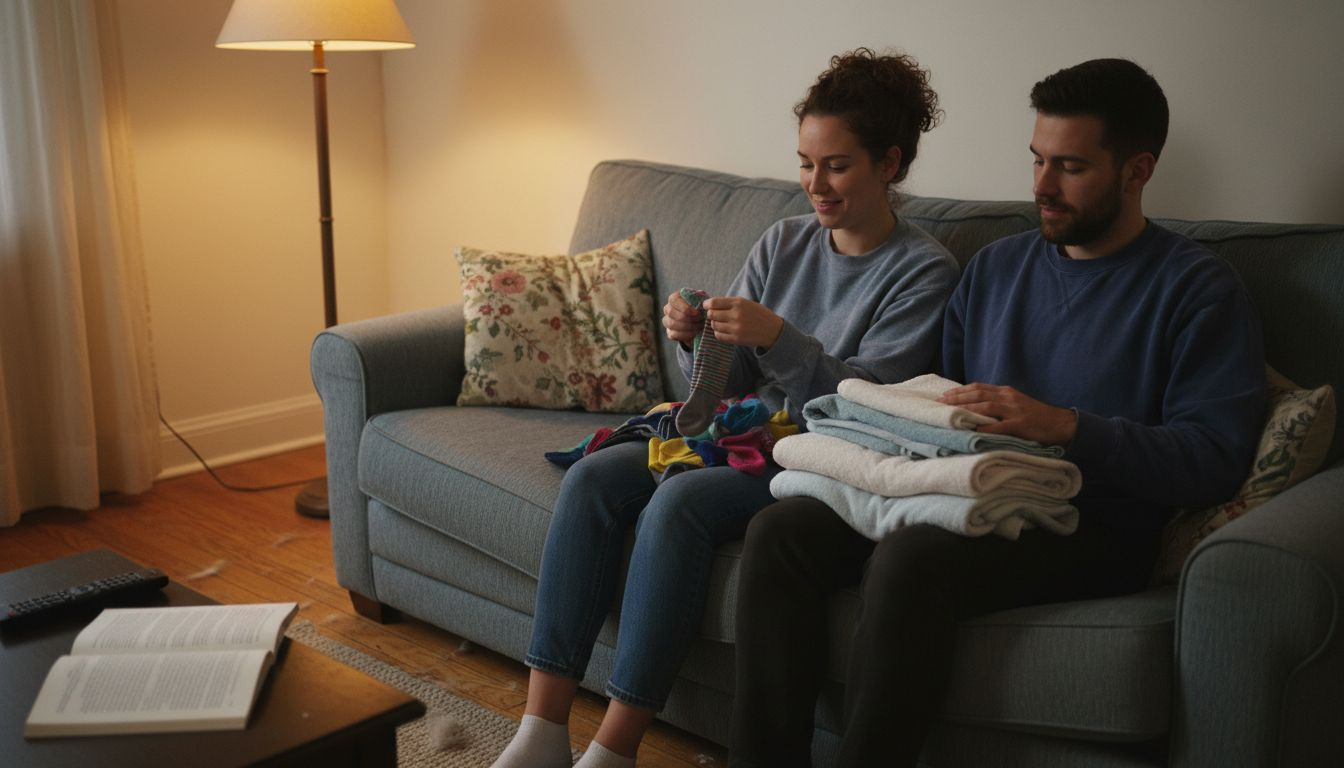
Successful routine implementation requires flexibility, mutual agreement, and consistent practice. Partners should view these structures not as rigid constraints but as dynamic frameworks that evolve with their relationship’s changing needs and individual growth trajectories.
Pro tip: Design routines collaboratively, ensuring both partners feel heard and valued in the process of creating shared relationship rhythms.`
How Shared Habits Shape Emotional Bonding
Emotional bonding emerges through intricate, subtle interactions that go far beyond surface-level communication. Synchronized emotional expressions reveal how couples unconsciously create deep connections through shared physiological and psychological experiences, transforming mundane moments into profound relational encounters.
The mechanisms of emotional bonding through shared habits include:
- Neurological Synchronization
- Mirroring each other’s emotional states
- Developing shared neural pathways
- Creating mutual emotional resonance
- Psychological Alignment
- Developing shared mental models
- Creating mutual understanding
- Building predictive relationship patterns
- Physical Connection Strategies
- Coordinated body language
- Simultaneous physiological responses
- Unconscious emotional attunement
- Cognitive Relationship Infrastructure
- Developing shared memory frameworks
- Creating mutual narrative constructions
- Generating collective relationship intelligence
These shared habits function as a relationship operating system, generating continuous emotional feedback loops that strengthen interpersonal connections. By intentionally designing consistent interaction patterns, couples create neurological and emotional bridges that transcend individual experiences.
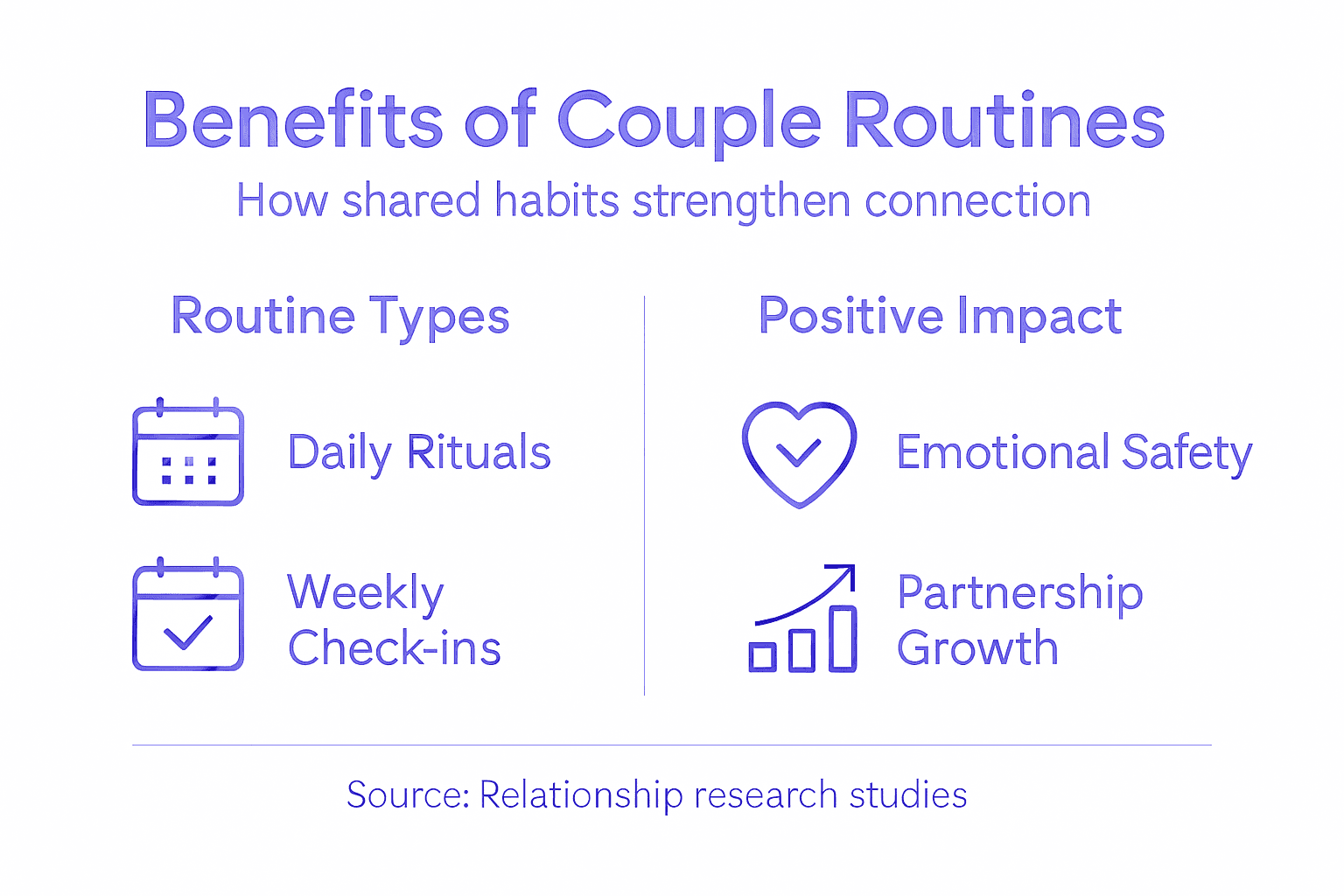
Successful emotional bonding requires deliberate practice and mutual commitment. Partners must approach shared habits as dynamic, evolving systems of connection, allowing flexibility while maintaining core relational intentions and emotional safety.
Pro tip: Practice micro-moments of synchronized attention, where you deliberately pause and create shared awareness during daily interactions.
Gamification and Love Languages in Couple Dynamics
Couples today are discovering innovative approaches to relationship growth, with gamification emerging as a powerful strategy for deepening emotional connections. Love Language Games demonstrate how structured, playful interactions can transform relationship dynamics, turning emotional communication into an engaging, collaborative experience.
Gamification in relationship contexts involves multiple strategic approaches:
- Emotional Recognition Mechanics
- Points for active listening
- Experience levels for empathy demonstrated
- Rewards for vulnerability
- Communication Challenge Systems
- Weekly intimacy quests
- Monthly connection missions
- Relationship skill-building challenges
- Appreciation Tracking
- Logging love language expressions
- Celebrating consistent emotional investments
- Visualizing relationship growth trajectories
- Collaborative Goal Frameworks
- Joint personal development tracks
- Synchronized individual and partnership objectives
- Mutual support point systems
These gamified approaches create a relationship engagement ecosystem that transforms emotional labor from invisible work into recognized, celebrated contributions. By making connection intentional and measurable, couples can navigate complex emotional landscapes with increased transparency and mutual understanding.
Successful gamification requires nuanced design that respects individual differences and cultural contexts. Partners must collaboratively define rules, maintain genuine emotional authenticity, and view these systems as supportive tools rather than rigid performance metrics.
Pro tip: Design your relationship gamification system as a co-creative process, ensuring both partners feel heard and motivated by the underlying mechanics.
Common Pitfalls and How to Overcome Them
Relationship routines are powerful tools, but without intentional design, couples can encounter significant challenges. Emotional flooding challenges demonstrate how unmanaged emotional responses can rapidly destabilize carefully constructed connection strategies, undermining even the most well-intentioned partnership efforts.
Common relationship routine pitfalls include:
- Communication Breakdown Patterns
- Unaddressed assumptions
- Avoidance of difficult conversations
- Blame-oriented language
- Selective listening
- Emotional Regulation Challenges
- Overwhelming emotional responses
- Reactive communication
- Diminished empathy capacity
- Escalating conflict cycles
- Routine Implementation Errors
- Inconsistent practice
- Rigid, inflexible approaches
- Lack of mutual agreement
- Performance-driven mindsets
- Personal Growth Misalignments
- Unbalanced effort distribution
- Divergent individual goals
- Competing personal narratives
- Unrecognized individual needs
Couple communication strategies reveal that overcoming these challenges requires proactive, empathetic approaches. Successful couples develop adaptive relationship intelligence by creating flexible frameworks that accommodate individual differences while maintaining core connection principles.
Effective pitfall navigation demands continuous learning, mutual vulnerability, and a commitment to growth. Partners must view challenges not as relationship failures, but as opportunities to deepen understanding, refine communication, and strengthen their emotional infrastructure.
This comparison highlights common routine pitfalls and the strategies to overcome them:
| Pitfall | Impact on Relationship | Overcoming Strategy |
|---|---|---|
| Communication breakdown | Increases misunderstandings | Practice transparent dialogue |
| Emotional regulation issues | Escalates conflicts | Develop joint coping mechanisms |
| Inconsistent routine practice | Reduces relationship stability | Agree on flexible structures |
| Personal growth misalignment | Causes resentment and tension | Align individual and shared goals |
Pro tip: Create a monthly “relationship retrospective” where you openly discuss what’s working, what’s challenging, and how you can collaboratively evolve your connection strategies.
Strengthen Your Couple Routines with a Playful Approach
The article highlights how intentional couple routines build lasting emotional safety and connection through shared habits and structured interactions. If you want to transform daily tasks and emotional bonding into a joyful growth journey without pressure, the Cutest Couple app offers a gamified system designed exactly for that. It balances personal growth, shared responsibilities, and love-language recognition to turn your routines into meaningful relationship milestones.
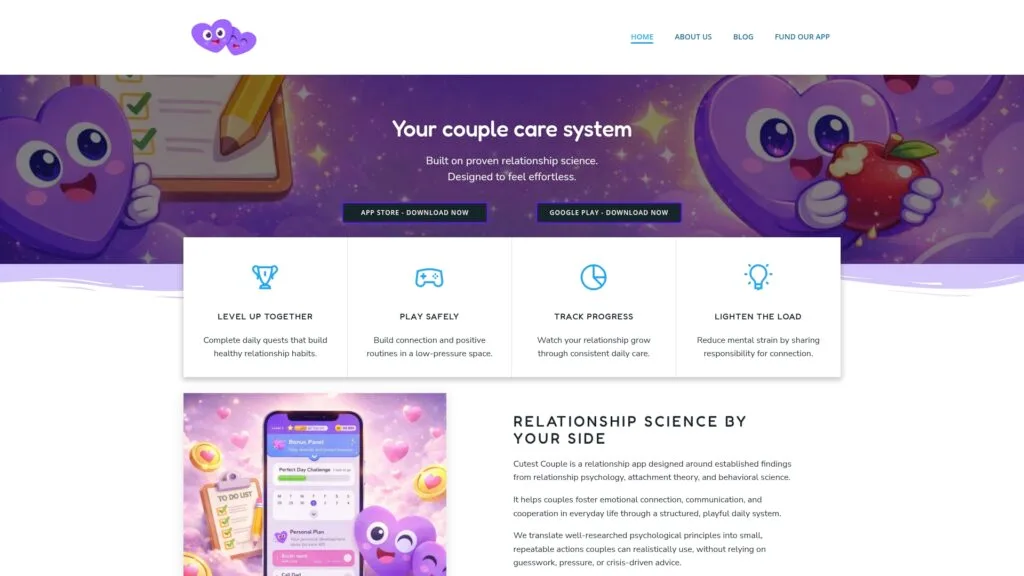
Ready to deepen your connection and create your own sustainable routine? Explore how easy it is to blend personal habits with teamwork or build shared responsibility and harmony. Join thousands of couples who turn daily effort into visible progress at Cutest Couple. Start today and watch your relationship thrive by turning routines into rewarding partnership moments.
Frequently Asked Questions
What are couple routines and why are they important?
Couple routines are intentional, structured interactions between partners that foster predictability and emotional safety. They help strengthen the relationship by promoting connection, trust, and teamwork.
How can we implement daily connection rituals in our relationship?
You can start with short, meaningful interactions, such as having coffee together in the morning or checking in with each other in the evening. The key is consistency and making these moments a priority.
What types of routines can enhance emotional intimacy in a relationship?
Emotional intimacy can be enhanced through routines such as scheduled deep conversations, mutual goal-setting, and shared activities that allow for emotional engagement and vulnerability.
How can gamification be used to strengthen couple dynamics?
Gamification can transform relationship growth into a playful experience by creating challenges, tracking emotional gestures, and rewarding collaborative efforts, making connection intentional and engaging.
No responses yet