


Juggling work, parenting, and a packed schedule often makes it easy for meaningful moments to slip by unnoticed. For many Millennial couples, especially dual-income parents, building a stronger emotional connection requires more than just good intentions—it takes clarity and structure. Milestone tracking in relationships means intentionally monitoring shared goals or achievements, transforming everyday wins into visible progress you both can appreciate. By understanding what matters most to your partnership, you can create a relationship story filled with purpose, direction, and genuine celebration.
Table of Contents
- Defining Milestone Tracking in Relationships
- Types of Relationship Milestones Couples Track
- How Gamified Milestone Systems Work
- Emotional Benefits of Shared Progress
- Common Pitfalls and How to Avoid Them
Key Takeaways
| Point | Details |
|---|---|
| Purpose of Milestone Tracking | Milestone tracking enhances relationship satisfaction by creating intentional shared goals that deepen connection. |
| Types of Milestones | Couples should identify and track various milestones, including commitment, intimacy, life-stage, growth, and adventure, that resonate with their relationship. |
| Benefits of Gamified Systems | Implementing a gamified milestone system can increase engagement and visibility of progress, making milestones rewarding and promoting consistent effort. |
| Avoiding Common Pitfalls | To maintain motivation, couples should set a manageable number of meaningful milestones and communicate clearly about their significance and expectations. |
Defining Milestone Tracking in Relationships
Milestone tracking isn’t complicated—it’s simply paying attention to the meaningful moments you’re building together. Think of it as creating a shared progress map for your relationship instead of drifting without direction.
At its core, milestone tracking in relationships means monitoring significant shared goals or achievements you and your partner work toward together. This could be anything from planning a trip, saving for a home, celebrating your anniversary in a specific way, or even completing a shared habit challenge. The key difference between random couple activities and tracked milestones is intentionality.
Why Milestone Tracking Matters
Research on goal support between partners shows something powerful: when you and your partner actively track progress toward shared goals, both of you feel more satisfied. It’s not magic—it’s what happens when you shift from hoping things work out to building them together deliberately.
Milestones create several immediate benefits:
- Clarity: You both know what you’re working toward and why
- Momentum: Visible progress builds motivation and emotional connection
- Accountability: Not in a punishing way, but in a supportive “we’re in this together” way
- Celebration: You actually notice and appreciate the wins instead of brushing past them
- Direction: Your relationship has a story with chapters, not just days blending together
What Makes a Milestone Worth Tracking
Not every couple activity qualifies as a milestone. Real milestones are rooted in what matters to you both. Understanding the foundational motivations behind your relationship—whether that’s deepening emotional connection, planning your family, exploring adventure together, or building stability—helps you identify which milestones truly matter.
Milestones fall into different categories:
- Emotional milestones: Deepening intimacy, resolving conflict patterns, building trust
- Life-stage milestones: Moving in together, getting engaged, starting a family
- Adventure milestones: Taking trips, trying new experiences, bucket list items
- Growth milestones: Developing habits together, supporting individual goals, financial targets
- Relationship rituals: Date night consistency, anniversary traditions, weekly check-ins
The difference between a milestone and a task is that milestones matter psychologically. You remember them. They shape how you see your relationship.
When you track milestones together, you’re not just checking boxes—you’re building a shared identity as a couple with direction and purpose.
Milestone Tracking vs. Task Management
It’s easy to confuse milestones with to-do lists. They’re different animals. A task is “take out the trash.” A milestone is “establish a shared household system that makes both of us feel like partners instead of roommates dividing chores.”
Milestones have emotional weight. They connect to your “why.” When you track them, you’re building a narrative of growth, not just managing logistics. This distinction matters because it changes how you feel about the effort.
Pro tip: Start by asking yourselves separately: “What do I want our relationship to look like in one year? Five years?” Compare answers and identify 3-5 themes—these become your milestone categories.
Types of Relationship Milestones Couples Track
Not all milestones look the same, and that’s the whole point. What matters to you and your partner might differ completely from another couple. Understanding the different categories helps you identify which ones actually matter to your relationship.
Commitment Milestones
These are the big, observable moments that mark deepening commitment. First dates, expressions of love, and marriage proposals represent the publicly recognizable transitions in your relationship story.
Commitment milestones typically include:
- First date: The moment you both decided to try something real
- Becoming exclusive: Choosing each other over other options
- First “I love you”: Verbal commitment that changes everything
- Moving in together: Merging daily life and routines
- Engagement: A formal promise of future marriage
- Marriage: Legal and emotional union
These moments often feel automatic or inevitable when you’re living them, but they’re worth tracking because they mark shifts in how you relate to each other.
Intimacy Milestones
Intimacy deepens through both physical and emotional vulnerability. These milestones aren’t just about physical connection—they include moments when you dropped your guard and let your partner see the real you.
Intimacy milestones might be:
- First time being physically intimate
- Sharing a vulnerable secret or fear
- Working through your first real conflict
- Meeting each other’s families
- Discussing dreams, goals, and values in depth
- Creating inside jokes or shared language
These moments often happen quietly, without fanfare, but they’re the glue that binds you together emotionally.

Life-Stage Milestones
Growing passion, intimacy, and commitment levels across relationship stages creates natural progression points. Major life transitions—buying a home, starting a family, changing jobs, moving to a new city—reshape your relationship dynamic.
Life-stage milestones include:
- First time managing finances together
- Buying property or signing a lease together
- Planning or starting a family
- Navigating career changes as a team
- Facing a health challenge together
- Making major decisions that affect you both
Growth Milestones
These are the ones you create deliberately—the goals you set and work toward as a couple. Real examples of couple habit trackers show how couples turn everyday actions into meaningful progress.
Growth milestones might include:
- Completing a shared habit challenge
- Reading and discussing a book together
- Taking a trip you’ve been planning
- Learning something new as a team
- Improving communication patterns
- Building a financial goal together
Growth milestones are unique because you get to design them. They reflect what you actually want your relationship to become.
The most meaningful milestones are the ones you actively choose to track, not just the ones that happen to you.
Adventure Milestones
These are the experiences that become part of your couple identity. They’re the stories you tell about yourselves.
Adventure milestones might be:
- First vacation together
- Trying something you’re both scared of
- Spontaneous road trip
- Visiting a meaningful place
- Creating a new tradition
- Saying yes to something unexpected together
Adventure milestones remind you that your relationship isn’t just about managing responsibilities—it’s about living.
Pro tip: Track milestones across all categories, not just the big relationship moments. The growth and adventure milestones you create together often matter just as much as the ones life hands you.
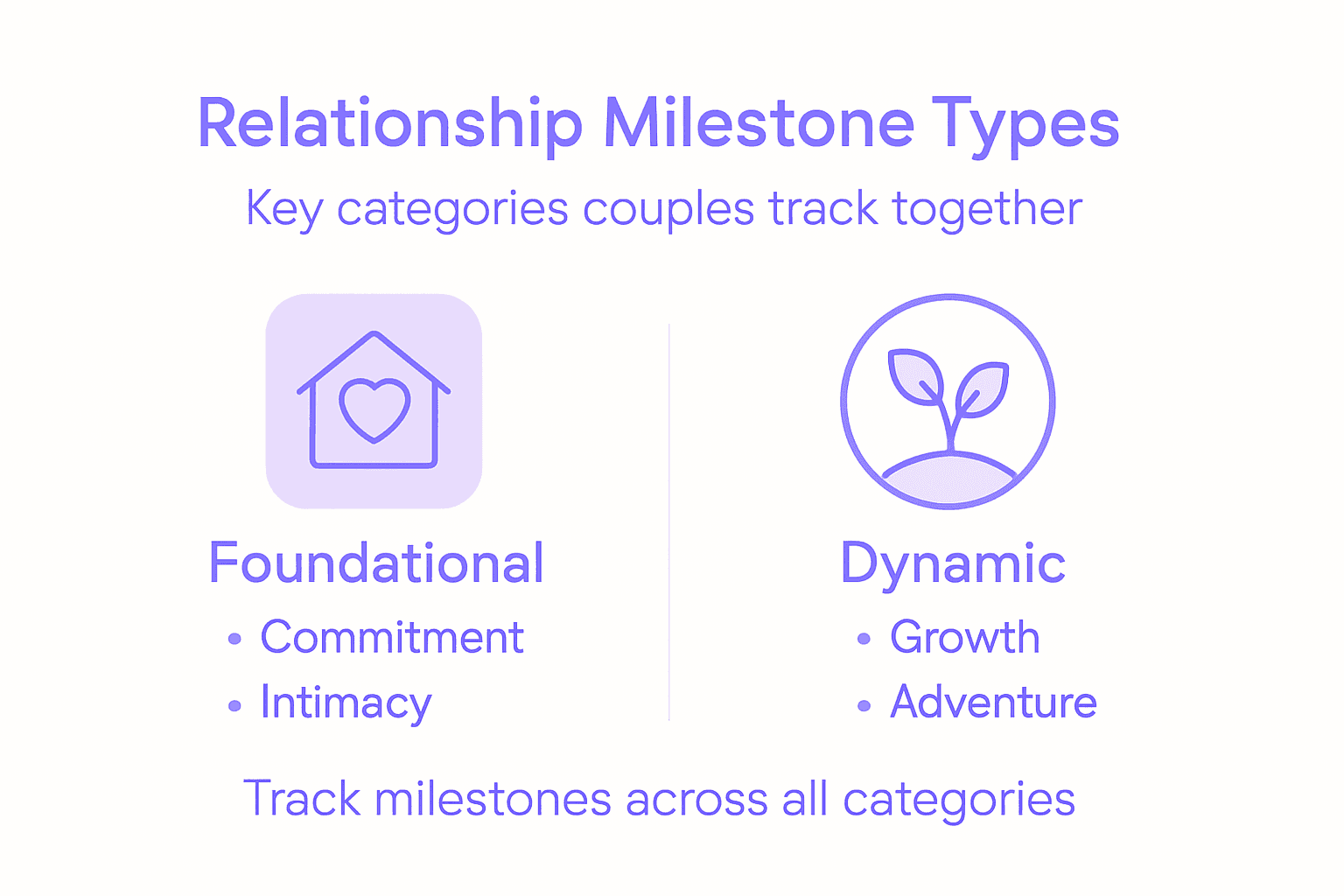
Here’s a summary of common relationship milestone categories and what they typically represent:
| Milestone Category | Core Purpose | Example Outcome |
|---|---|---|
| Commitment | Solidifying long-term intent | Becoming exclusive partners |
| Intimacy | Deepening emotional closeness | Sharing personal fears |
| Life-Stage | Navigating major transitions | Managing finances together |
| Growth | Developing together intentionally | Starting a joint habit challenge |
| Adventure | Creating shared memories | Taking first vacation together |
How Gamified Milestone Systems Work
Gamefication sounds complicated, but it’s really just borrowing mechanics from games to make real-life progress feel rewarding. Instead of checking off a boring to-do list, you’re leveling up together.
At its core, a gamified milestone system turns relationship progress into visible, measurable wins. You set milestones, track them, earn rewards, and watch your relationship actually move forward on screen.
The Core Game Mechanics
Game design elements like progress tracking, rewards, and challenges structure relationship advancement into something your brain finds motivating. Here’s what actually happens:
Key mechanics in gamified systems include:
- Progress bars: Visual representation of how close you are to a milestone
- Points or XP: Earning rewards for completing shared activities or habits
- Levels: Relationship stages that unlock new challenges or features
- Badges: Recognition for specific achievements (“First vacation together,” “30-day date streak”)
- Rewards: Real benefits you both actually want, like choosing the next date activity
- Streaks: Motivation to maintain consistency with shared habits
Each mechanic serves a purpose: it makes invisible progress visible and invisible effort feel valued.
How Engagement Multiplies
When you can see progress, you stay motivated. Social gamification mechanisms like cooperation and positive feedback loops significantly increase engagement with behavioral goals—including relationship milestones.
This works because your brain responds to:
- Immediate feedback: Completing a habit instantly shows points or progress
- Shared goals: You’re not competing against each other; you’re leveling up together
- Small wins: Frequent small victories feel better than one massive annual goal
- Clear next steps: The system always shows what comes next, removing guesswork
- Celebration: Hitting milestones triggers actual notifications and recognition
It’s not manipulation—it’s alignment. Your brains naturally reward completion and progress. Gamification just makes those rewards visible and consistent.
The Relationship to Real Connection
Here’s the critical part: the game isn’t the point. Connection is. The game mechanics are training wheels that keep you showing up, paying attention, and celebrating each other.
When you see your partner earned 50 points by planning a thoughtful date, you notice the effort. When you both level up together, you feel like teammates. When you unlock a reward together, you actually use it to spend time together.
The mechanics create conditions for connection, not connection itself.
Gamified systems work because they make consistency rewarding and progress obvious—two things that fuel real emotional connection.
Why This Matters for Busy Couples
You probably forget to celebrate wins. You’re probably unclear about what progress even looks like. A gamified system solves both problems by creating automatic recognition and visible progress.
Instead of hoping your partner notices your effort, the system makes it impossible to miss.
To help you identify which approach is best for your relationship, here’s a comparison of traditional milestone tracking and gamified approaches:
| Approach | Motivation Driver | Visibility of Progress | Typical Challenge |
|---|---|---|---|
| Traditional Tracking | Personal accountability | Often low or unclear | Forgetting to celebrate wins |
| Gamified System | Mutual rewards and points | Highly visible and dynamic | Risk of focusing on points only |
Pro tip: Choose rewards that actually strengthen connection—like planning a specific date, taking a weekend trip, or trying a new experience together—rather than generic rewards that feel hollow.
Emotional Benefits of Shared Progress
When you track milestones together, something shifts emotionally. You move from being two individuals managing separate lives to being a team with a shared mission.
This isn’t just feel-good talk. Shared progress on goals leads to increased life satisfaction through emotional support and strengthened emotional bonds. When you’re working toward something meaningful together, your brains literally rewire to feel more connected.
Building Emotional Safety
Shared progress creates vulnerability in a good way. You’re saying, “Here’s what matters to me, and I want to build it with you.” That requires trust, and trust deepens when your partner shows up consistently.
Milestone tracking builds safety because:
- Your effort gets noticed: Instead of hoping your partner sees what you did, the system makes it visible
- You celebrate together: Wins belong to both of you, reinforcing “us” instead of “me”
- Small wins reduce pressure: Frequent progress feels more achievable than one perfect year
- Consistency builds predictability: Your partner knows what to expect from you, and you from them
- Vulnerability pays off: When you show up, your partner responds—creating a cycle of trust
Each small celebration reinforces that your partner has your back.
The “We” Effect
Individual goals matter. But when you pursue shared milestones, something neurochemical happens. You’re not just achieving something—you’re achieving it together.
This shifts how you experience effort. Better joint coordination in goal pursuit strengthens emotional bonds and enhances well-being for both partners. When your success is tied to your partner’s success, you both feel invested.
You become teammates instead of roommates.
Breaking the Effort Invisibility Problem
Here’s what happens in most relationships: You work hard, your partner doesn’t notice. They work hard, you’re too busy to see it. Resentment builds quietly.
Milestone tracking makes effort visible. When your partner sees you earned points by planning a date, handling household tasks, or supporting them emotionally, they notice. And when effort gets noticed, the emotional impact multiplies.
When both partners see and acknowledge each other’s contributions, satisfaction increases dramatically—not because the effort changed, but because it’s finally recognized.
Deeper Emotional Connection Over Time
Shared progress isn’t just about today. Over months and years, tracking milestones creates a narrative. You can look back and see the relationship you’ve actually built.
You went from casual dating to moving in together to planning a family. You completed 10 date challenges. You supported each other through three job changes. That’s not random—that’s a relationship with direction and intention.
That narrative becomes part of your identity as a couple.
Pro tip: Celebrate milestones publicly or privately in a way that feels natural to both of you—this amplifies the emotional benefit and prevents celebrations from feeling forced.
Common Pitfalls and How to Avoid Them
Milestone tracking sounds simple until you actually try it. Most couples hit the same obstacles—and the good news is they’re all preventable with a little awareness.
Here’s what goes wrong, and how to stay on track.
Pitfall 1: Setting Too Many Milestones
Ambition is great until it becomes overwhelming. You can’t track 47 milestones at once and expect to feel motivated. You’ll feel buried instead.
The solution: Start small. Three to five meaningful milestones per quarter is realistic. You can always add more once you build momentum.
Too many milestones also create decision fatigue. Your brain gets tired choosing between priorities, so nothing feels urgent.
Pitfall 2: Choosing Milestones That Don’t Matter
Not every goal deserves to be a milestone. If you’re only tracking them because you think you should, your brain knows. Motivation disappears fast.
Clear, meaningful milestones prevent confusion and keep you focused on what actually matters. Your milestones should reflect real desires—not Instagram-worthy goals or what other couples are doing.
Asking yourself “Why does this matter to us?” cuts through the noise.
Pitfall 3: Poor Communication About What Milestones Mean
You think you’re both working toward the same goal. Turns out, you have completely different definitions of success.
One person wants “save $10,000” as a milestone. The other thinks that means no takeout ever. One wants “spend more quality time together.” The other interprets that as mandatory date nights.
Misalignment kills motivation faster than anything else.
Fix this by discussing:
- What does this milestone actually look like when we achieve it?
- What effort does each of us need to contribute?
- How will we know when we’ve succeeded?
- What will we do to celebrate?
These conversations are uncomfortable but essential.
Pitfall 4: Forgetting to Celebrate
You hit a milestone. And then… nothing. You move on to the next one without pausing.
Underutilizing milestones as tools for motivation and celebration drains the emotional fuel that keeps you going. Celebration isn’t frivolous—it’s the reward mechanism that makes you want to keep showing up.
Every milestone deserves acknowledgment. Even small ones.
Celebration doesn’t have to be expensive or elaborate. It just has to be intentional and shared.
Pitfall 5: Setting Impossible Timelines
You want to travel to three countries, save $50,000, and completely overhaul your communication style by next summer. Then reality hits.
Impossible timelines create shame when you “fail.” Shame kills motivation and connection.
Be realistic about what you can actually accomplish while maintaining jobs, families, and sanity.
Pitfall 6: Treating Milestones as Rigid
Life changes. Priorities shift. A milestone that made sense in January might not make sense in June.
Give yourself permission to adjust. Pivot when needed. The system serves your relationship, not the other way around.
Pro tip: Review your milestones together once a month—not to judge yourself, but to make sure they still reflect what you both actually want.
Turn Your Relationship Milestones Into Lasting Connection with Cutest Couple
Tracking meaningful relationship milestones helps couples build emotional safety, celebrate progress, and create a shared narrative of growth. Yet balancing this intentional effort with busy daily lives can feel overwhelming. Cutest Couple is here to transform how you nurture your connection by turning real-life effort into visible wins through a gamified system that combines shared goals, love-language recognition, and habit tracking.
Explore our Organizing tools to manage shared tasks without pressure and discover how our Self-Care features foster personal growth alongside relationship goals. With Cutest Couple you get more than a task manager — you get a playful, emotionally fair way to track milestones, celebrate victories, and deepen intimacy. Visit cutestcouple.app now and start building the relationship story you both deserve.
Frequently Asked Questions
How does milestone tracking improve relationships?
Milestone tracking helps couples build a shared sense of direction, enhances accountability, and celebrates achievements together, leading to increased satisfaction and emotional connection.
What types of milestones should couples track?
Couples can track commitment milestones, intimacy milestones, life-stage milestones, growth milestones, and adventure milestones, depending on what matters most to them.
How can we celebrate our milestones effectively?
Couples should acknowledge every milestone, regardless of size, through intentional celebrations that can be simple yet meaningful, reinforcing their shared journey and accomplishments.
What common pitfalls should we avoid in milestone tracking?
Common pitfalls include setting too many milestones, choosing unimportant ones, poor communication, forgetting to celebrate, setting impossible timelines, and treating milestones as rigid. It’s essential to regularly review and adjust milestones to reflect changing priorities.
No responses yet